
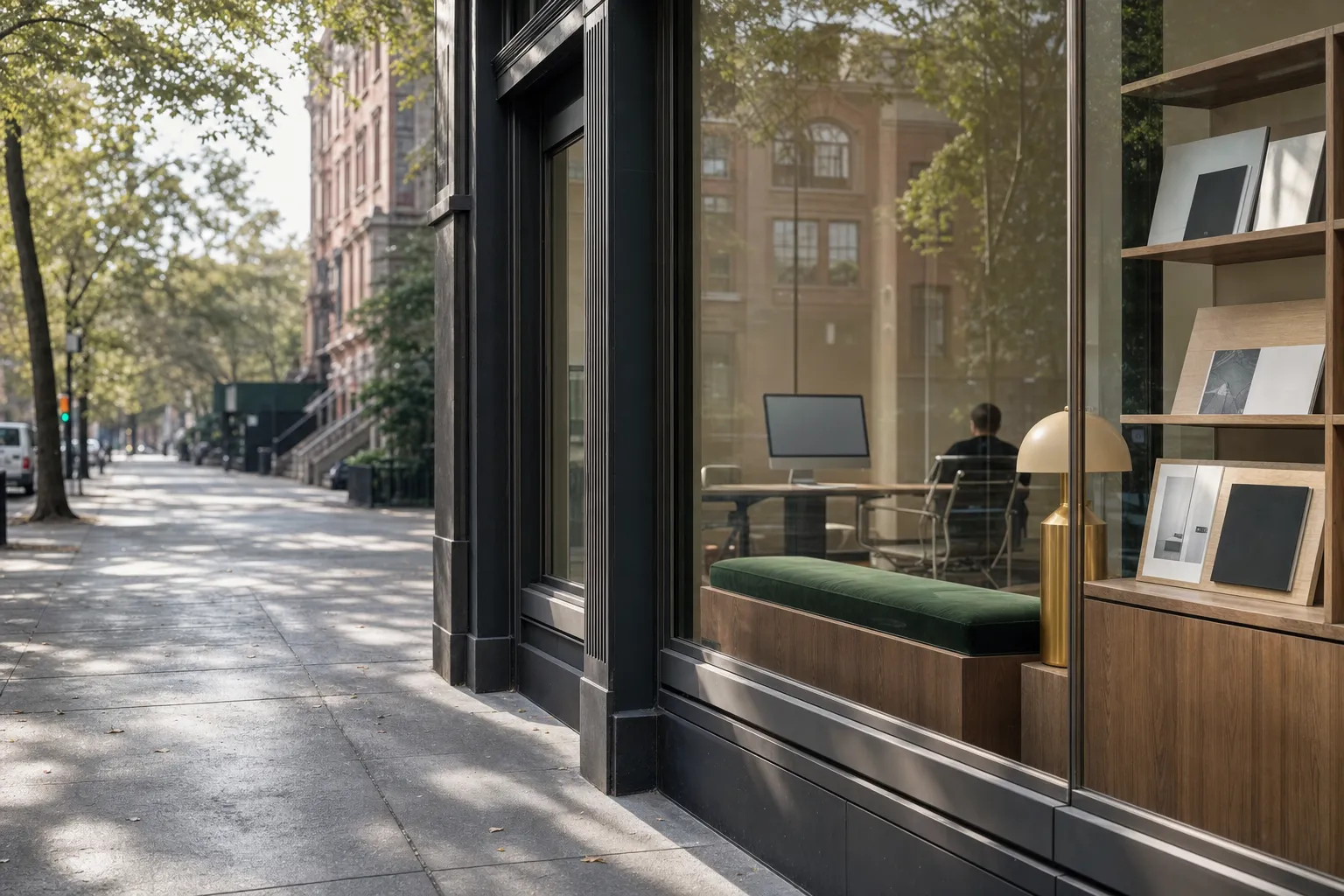
A visual identity system is the organized set of visual rules, assets, and usage guidelines that let a business present itself consistently online and offline, and we make that system part of every website we design so your Midtown West presence looks and behaves like a single, trusted brand.
What a visual identity system is
Definition. A visual identity system includes a logo family, color palette, typography rules, imagery style, iconography, layout patterns, and usage guidelines that together form a consistent visual language for a brand.
How it differs from a logo. A logo is one element. A visual identity system defines how that logo appears, where it goes, how type and color pair with it, and how imagery and components should look across a website and other channels.
Why it matters for web design in Midtown West
Customers judge credibility quickly online. A coherent visual system reduces friction, speeds recognition, and increases the chance someone will trust your message and act. For local businesses in Midtown West and nearby neighborhoods, a clear identity also helps store pages, event listings, and local marketing feel familiar and reliable.
When we design websites we treat the identity system as part of the technical and content specification, not an afterthought. That helps with performance, accessibility, and consistent messaging across pages.
Key concepts inside a visual identity system
- Logo family. Primary mark, secondary marks, and clear space rules for different sizes and placements.
- Color palette. Primary and secondary colors with contrast rules for accessibility.
- Typography rules. Web safe type stacks, size scale, line length, and hierarchy for headings and body text.
- Imagery and photography style. Guidance on subject matter, crop, and tone so photos feel consistent across the site and social.
- Iconography and illustration rules. Line weight, corner radius, and metaphor rules so small UI elements align with the brand.
- Layout and component patterns. Reusable card, hero, and form patterns that speed design and keep the product consistent.
- Usage guidelines. Dos and donts for logo placement, color inversion, and incorrect lockups.
How we incorporate a visual identity system into web design
- Discovery. We review existing assets, stakeholder goals, competitor positioning, and how customers find and use your site. This includes local search signals and any offline materials like signage or menus.
- Foundations. We establish the logo family, color palette, and typography choices that meet accessibility contrast ratios and scale across responsive layouts.
- Component design. We design a set of reusable UI components and layout patterns so content editors can maintain consistency without design knowledge.
- Content and messaging alignment. We map key messages to page templates so headings, calls to action, and feature lists visually match the brand voice.
- Documentation. We deliver a compact set of brand guidelines and a component library alongside assets for web, print, and social use.
- Handoff and training. We provide practical guidance for your team and for any third party who will update the site or use brand materials later.
Checklist for a website ready visual identity rollout
Pre launch checklist
- Logo files in SVG and high resolution raster formats for web and print
- Color palette with hex and RGB values and contrast notes
- Typography stack with web font licenses and fallback fonts
- Photography direction and 8 to 12 approved images sized for responsive use
- Icon set and rules for new icon creation
- Component library exports for the site builder or developer
- Short brand guidelines PDF for partners and vendors
Common questions and misconceptions
Does every small business need a full visual identity system?
Short answer, no. Many small businesses start with a logo and one color. A full system makes sense when you need consistent messaging across a website, physical location, social channels, and marketing materials. We often recommend a scaled system that grows with the organization.
Will a visual identity slow down a web project?
A clear identity can speed decisions. Instead of debating fonts and colors per page, teams follow established rules and move faster. In our process we bundle identity work with the design phase so the site and system evolve together.
Is this the same as brand strategy?
They overlap. Brand strategy defines positioning and messaging. A visual identity system translates those choices into a usable design language. We collaborate with clients who have a strategy in place and also help clients define the visual side when strategy is still forming.
When a visual identity system matters most
- Launching a new website where first impressions matter, for example professional services and restaurants in Midtown West
- Scaling from a single owner operated site to multiple locations or services
- Preparing marketing campaigns that must match landing pages and social creatives
- When accessibility and performance are non negotiable requirements
Comparison: logo only versus a full visual identity system
| What it covers | Logo only | Visual identity system |
|---|---|---|
| Use across channels | Limited | Consistent across site, social, print, and signage |
| Design rules | Minimal | Clear rules for color, type, and components |
| Speed of updating | Slow and inconsistent | Faster because of reusable components |
| Accessibility | Often overlooked | Built into color and type choices |
Pro tip: When we pick type for a website we test the scale at typical reading distances and on mobile. A readable type scale reduces bounce rates and improves comprehension.
Related services we coordinate with visual identity work
Designing an identity without considering search, performance, and marketing reduces its usefulness. We coordinate visual identity work with our web design process and complementary services like Web Design, Marketing Consulting, and SEO so the visual system supports discoverability and conversions.
How local context changes identity choices
Midtown West and neighboring areas like the Theater District have dense commercial signage and competitive listings. That influences color contrast for outdoor and profile imagery, hero photography choices that reflect neighborhood landmarks, and concise messaging for local search snippets. We design assets to feel at home in the local visual language while keeping your brand distinct.
For clients focused on Midtown West presence we also consider how brand elements appear on local directories, mapping thumbnails, and in social posts that reference nearby landmarks.
Learn more about local visibility and how it ties to identity in our topic overview on Visual Identity Systems and our location resources for the Theater District.
Helpful resources and references
Standards and guidelines are useful when you need to scale. Industry associations such as AIGA resources on design practice discuss ethical and practical considerations for visual systems. For broader design fundamentals and behavior we reference educational materials from university design programs and executive education. For labor market context about demand for web and digital designers, see the Bureau of Labor Statistics page on web developers and digital designers.
Key takeaway
A visual identity system is more than a logo. When integrated into web design it improves clarity, trust, and conversion. For Midtown West businesses a consistent system helps you stand out locally while making future updates and marketing easier to manage.
Frequently asked questions
How long does it take to create a visual identity system for a website?
Timelines vary by scope. A compact system for a small business can take a few weeks, while a full system with component libraries and documentation typically takes several months. We align the timeline with the web design schedule so the site launch and identity rollout happen together.
What deliverables should we expect from an identity system?
Expect logo files in vector and raster formats, a color palette, typography guidance, approved image samples, an icon set, component patterns for the website, and a short brand guideline document that explains usage rules.
How does a visual identity affect search engine visibility?
Indirectly. Clear visual hierarchy and readable typography improve user engagement and time on site. Consistent use of imagery and messaging helps with brand recognition in local listings. We also make sure visual choices do not hinder performance or accessibility, which are direct ranking factors.
Learn more and view our local work
Check our Google Business Profile to read client reviews and get directions for an in person visit, or explore related pages on our site to learn more about how identity and web design work together.